
2026 Plenary Sessions
2026 Plenary Speakers

Professor Clara Saraceno - Frontiers in Optics Plenary Speaker
Head Chair of Photonics and Ultrafast Laser Science, Ruhr University Bochum, Germany
Terahertz light is becoming a ubiquitous tool in many scientific fields and is also increasingly deployed in industrial settings, in inspection, non destructive testing and other security applications. Terahertz wave "see through" optically opaque objects, and can provide rich spectroscopic information. In science, they can excite and probe a plethora of low energy phenomena in condensed matter. While these systems have seen tremendous progress in last decades, efficient, and lab-based THz generation methods combining ultra-broad broad bandwidth and high dynamic range (e.g., as provided by high THz average power and correspondingly high repetition rate) remain very rare, and most measurements remain too slow, which limits their wide applicability. In recent years, an emerging research area has gained speed: increase the average power pf broadband THz sources using state-of-the-art, high-average power ultrafast Yb-gain based lasers providing multi-100-W to kilowatt average-power levels as excitation sources. Recent results have allowed to reach power levels in the THz domain in the multi-ten to multi-hundred milliwatts in different repetition rate regions – which was previously restricted to accelerator -type THz sources. This progress opens the door to a multiplicity of new and old research areas to be re-visited. In this talk, we review recent progress in the generation of high-average power THz-TDS. We will present the state-of-the-art of high-power ultrafast laser sources with potential for driving THz sources, current technological challenges in scaling THz average power, and applications areas that could potentially benefit from these novel sources.
Clara Saraceno was born in Argentina in 1983. She completed a dual degree program in France and earned her doctorate in physics from ETH Zurich in 2012. After a postdoctoral stay at ETH Zurich and University of Neuchatel she received the Sofja Kovalevskaja Prize from the AvH (2015) and started the Photonics and Ultrafast Laser Science Group as Associate Professor in the Faculty of Electrical Engineering at Ruhr University Bochum. In 2018, she was awarded an ERC Starting Grant followed in 2024 by a Consolidator Grant. She is a Fellow of Optica since 2022. Prof. Saraceno is now a full professor at RUB and her current research interest spans from Laser technology to Terahertz technology, laser-plasma interactions among others.
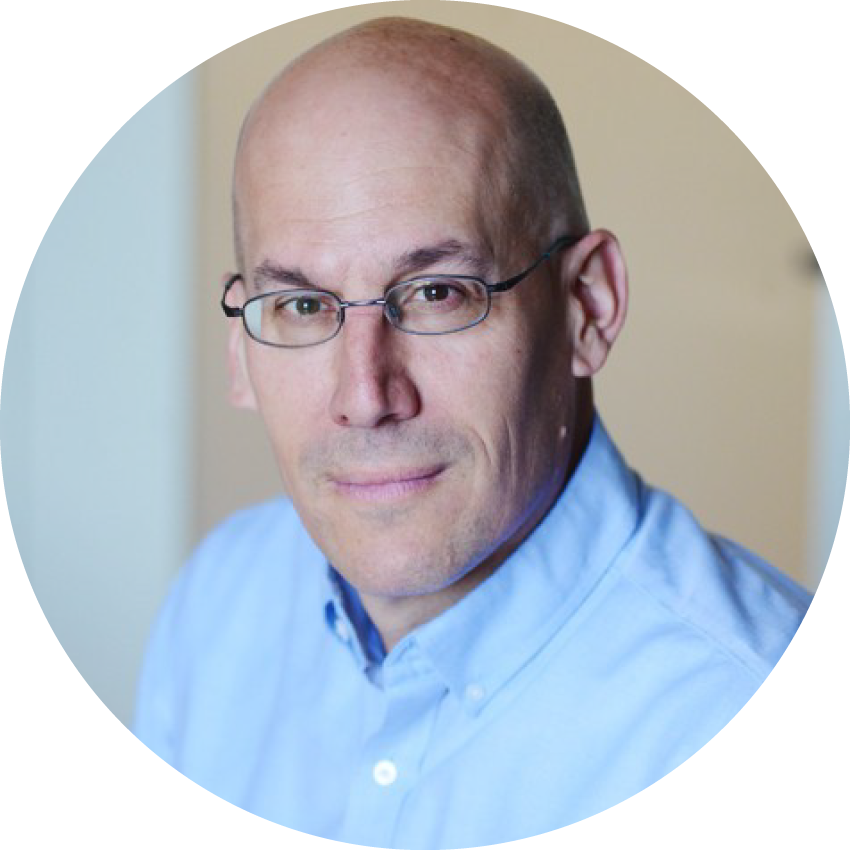
Professor Alexander Gaeta - Laser Science Plenary Speaker
David M. Rickey Professor of Applied Physics at Columbia University, United States
I will review our recent work on Kerr frequency combs generated in microresonators. Such combs offer a rich system for studies of complex nonlinear dynamics and for applications in time and frequency metrology, spectroscopy, sensing and data communications.
Alexander Gaeta received his PhD in Optics from the University of Rochester in 1991. He is the David M. Rickey Professor in the Department of Applied Physics and Applied Mathematics at Columbia University. He was on the faculty of the School of Applied and Engineering at Cornell University from 1992 to 2015 and served as its Director from 2012 to 2014. He co-founded Xscape Photonics, Inc., served as the CEO from 2022 to 2024 and is currently the President.
Gaeta has made pioneering contributions to quantum and nonlinear photonics. These include key advances to nonlinear wave propagation that provided critical understanding to self-focusing and filamentation of ultrashort laser pulses, the generation of slow light via stimulated scattering, and nonlinear processes in photonic crystal fibers. He and his group have also performed seminal research in nonlinear nanophotonics that enabled photonic-chip dispersion engineering, optical frequency combs, generation of quantum states of light and all-optical signal processing.
He holds 20 patents, has published more than 300 papers in quantum and nonlinear optics, and is a Thomson Reuters Highly Cited Researcher. He served as the founding Editor-in-Chief of the journal Optica. He is currently serving as Vice-President of Optica.
He is a Fellow of Optica, APS, and IEEE. He is the recipient of the Charles H. Townes Medal and the Stephen D. Fantone Distinguished Service Award.
2026 Visionary Speakers
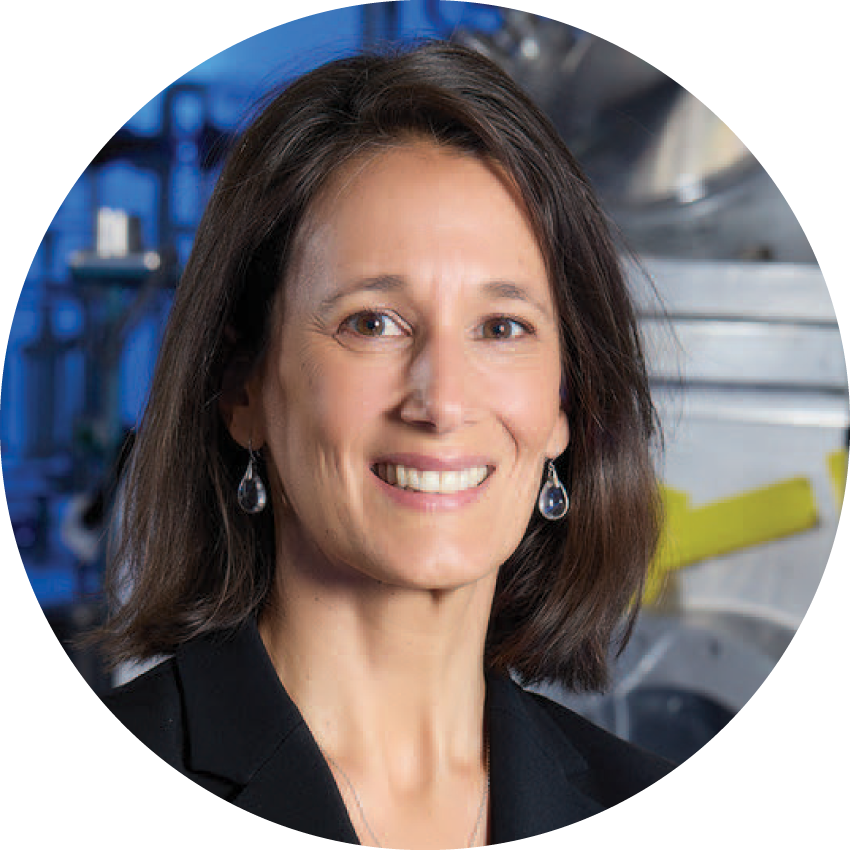
Félicie Albert - Frontiers in Optics Extreme Light Visionary Speaker
Lawrence Livermore National Laboratory, United States
LaserNetUS connects high-power laser facilities across North America to enable discovery science in plasma physics, fusion energy, particle acceleration, and advanced diagnostics. This talk highlights scientific opportunities across the network, including at LLNL’s Jupiter Laser Facility, and shows how coordinated access, innovation, and partnership are advancing extreme light science.
Félicie Albert is Director of the Jupiter Laser Facility at Lawrence Livermore National Laboratory and DOE Fusion Energy Sciences Point of Contact for LLNL. Her research focuses on laser-plasma interactions and the development of novel electron, x-ray, and gamma-ray sources for high energy density science. She earned degrees in physics, optics, and engineering in France and the United States. Albert is a recipient of the PECASE, a DOE Early Career Award, the APS Katherine E. Weimer Award, and the Edouard Fabre Prize. She is an APS and Optica Fellow, and currently serves as Chair Elect of APS-DPP.
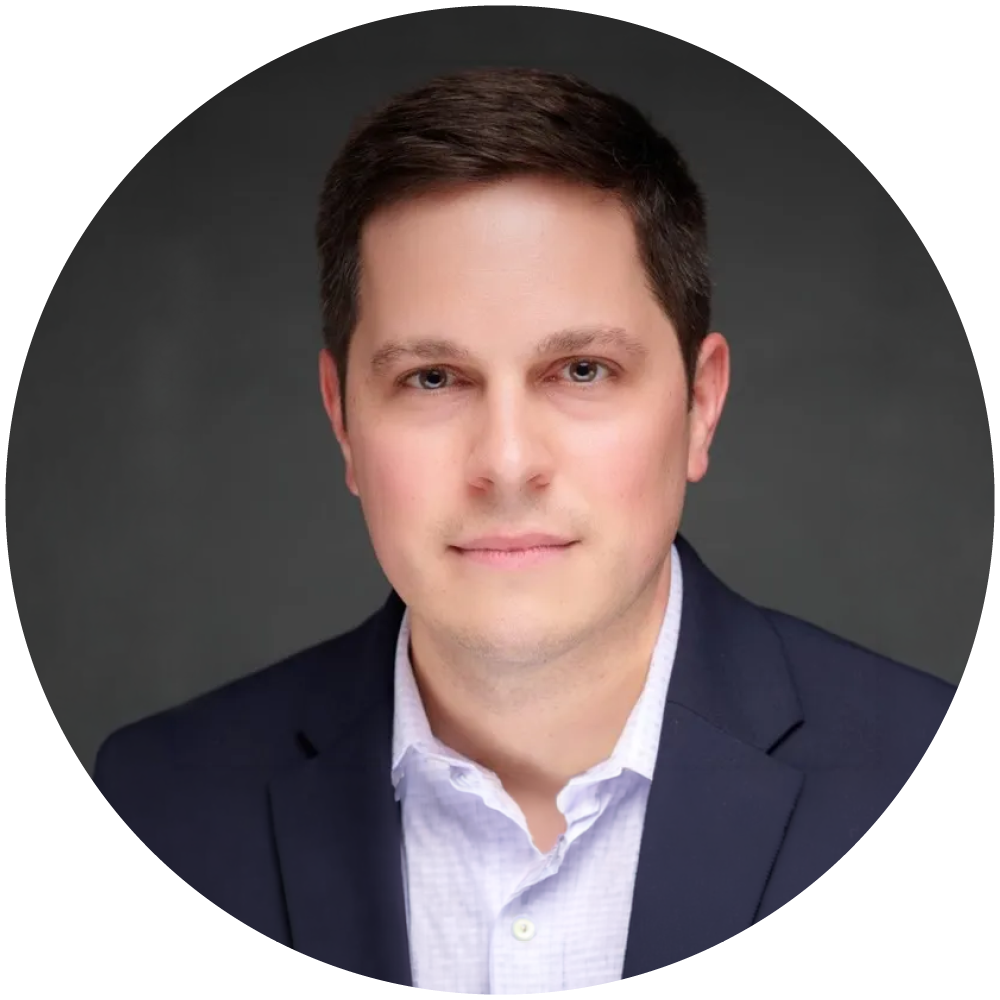
Gregory Heckler - Frontiers in Optics Space Optics Theme Visionary Speaker
NASA Laser Communications Networks, United States
To Be Announced
Greg Heckler is Program Executive for Commercialization at NASA’s Space Communication and Navigation Program (SCaN) and oversees the transition of NASA’s near-Earth missions to commercially provided communication and navigation services. Greg is also responsible for coordinating development and integration of NASA’s lunar infrastructure that’ll support Artemis astronauts’ safety and success on the Moon and beyond.
Prior to his position at NASA Headquarters, Greg was a telecommunications systems engineer at NASA’s Goddard Space Flight Center. He spent 6 years supporting the Tracking Data Relay Satellite Project (TDRS) as Deputy Telecommunication Systems Manager and Payload Manager, contributing to the construction, launch, and operational deployment of three TDRS satellites.
Throughout his career Greg has supported SCaN projects including the Space Network Ground System Sustainment Project, McMurdo TDRS Relay System, the SCaN Testbed, space relay architecture studies, and technology development activities. Greg started his NASA career in 2006 working on the Navigator spaceflight GPS receiver, helping to achieve the receiver’s first spaceflight in 2009 on STS-125 prior to its operational use on the Global Precipitation Measurement (GPM) and Magnetospheric Multiscale (MMS) missions. He holds a Bachelor of Science and Master of Science degree in aerospace engineering from Purdue University.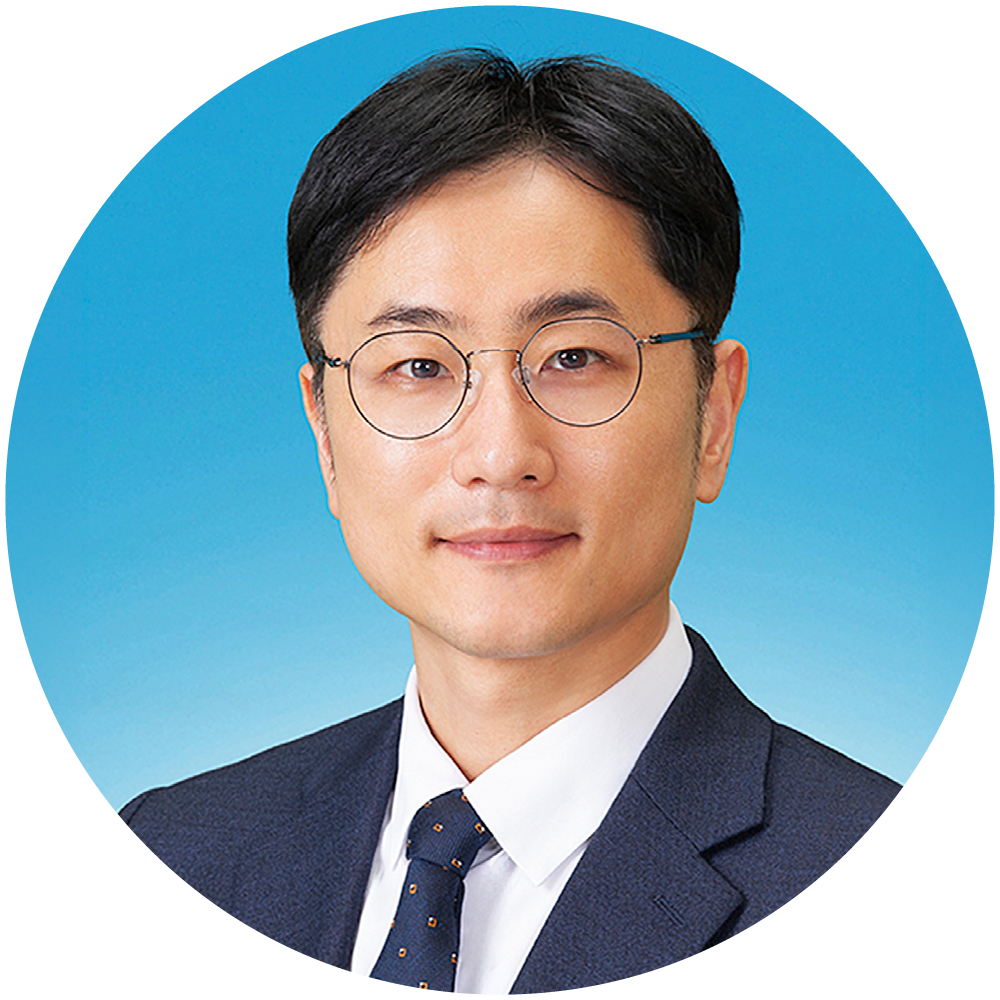
Jae-Hyeung Park - Frontiers in Optics Virtual Reality and Augmented Vision Theme Visionary Speaker
Seoul National University, Republic Of Korea
Future AI glasses require not only compact hardware but also perceptually realistic visual experiences for comfortable everyday use. This talk reviews display technologies for correct depth perception, realistic interaction and accurate appearance, including Maxwellian, light-field, holographic, occlusion-capable, and color-aware displays and discusses future directions toward human-centered augmented vision.
Jae-Hyeung Park is a faculty member in the Department of Electrical and Computer Engineering at Seoul National University, Korea. He received his B.S., M.S., and Ph.D. degrees from Seoul National University in 2000, 2002 and 2005, respectively. His research interests include computational imaging and display technologies for holographic, light-field and near-eye display systems. He is an Optica Fellow and Editor-in-Chief of the Journal of Information Display. His recent research focuses on perceptually realistic augmented reality, including three-dimensional displays, occlusion-capable AR systems and human-centered display technologies for future AI glasses.
R.J. Dwayne Miller - Laser Science Visionary Speaker
University of Toronto, Canada
The posed quintessential question is not cast as an origins of life issue but rather directed towards understanding the underlying physics by which chemistry breathes life into otherwise inanimate matter. The real issue is how chemistry scales in complexity up to the level of biological systems. The light matter interactions being exploited to achieve this Moon Shot for Biology will be discussed as part of a proposal to launch a global initiative to map the cell.
R. J. Dwayne Miller has published over 380 papers, notably contributions leading to the development of ultrabright electron sources to light up atomic motions, achieving the long-held goal to watch atomic motions during the defining moments of chemistry. This research directly observed the collapse of innumerable possible nuclear pathways to reduced dimensions defined by reaction modes, directly resolving how chemistry scales in complexity from few atoms up to biological processes. His research accomplishments have been recognized with the NSF Presidential Young Investigator Award, Sloan Fellowship, Guggenheim, Dreyfus, Humboldt, Polanyi Award, Royal Society of Canada (RSC) Rutherford Medal, Chemical Institute of Canada (CIC) Medal, ACS E. Bright Wilson Award, APS Earl K Plyler Prize, European Physical Society Award in Laser Science for “Achieving the Fundamental Limit to Min. Invasive Surgery with Complete Biodiagnostics”. He is also a strong advocate for science promotion earning the RSC McNeil Medal and the ACS Helen M. Free Award for founding Science Rendezvous, the largest event of its kind, involving >6000 volunteers annually to inspire the next generation. He is a Fellow of Optica, the RSC, RSChem, FCIC and was inducted as a Fellow of the Royal Society 2023.
Jelena Vuckovic - Laser Science Visionary Speaker
Stanford University, United States
Integrated photonics is essential in all of modern computing hardware (AI and quantum), sensing systems, and wearable technology. To achieve desired efficiency, robustness, and functionalities of these devices, it is necessary to employ new design approaches (such as inverse design), new physics and to explore new materials and integration approaches.
Jelena Vuckovic (PhD Caltech 2002) is the Jensen Huang Professor of Global Leadership, Professor of Electrical Engineering and, by courtesy, of Applied Physics at Stanford. She is a member of the National Academy of Sciences and an External Scientific Member of the Max Planck Institute for Quantum Optics. Her awards include the R.W. Wood Prize from Optica, the Zeiss Award, the Vannevar Bush Faculty Fellowship, the Geoffrey Frew Fellowship from the Australian Academy of Sciences, the IET A. F. Harvey Engineering Research Prize and the Humboldt Prize. She is a Fellow of the APS, Optica, and IEEE, the lead editor of Physical Review Applied and a co-founder of SPINS Photonics.

Philippe Guyot-Sionnest - Laser Science Visionary Speaker
University of Chicago, United States
Colloidal quantum dots, already proven in visible displays, can also provide strong infrared transitions. They offer a low-cost, adaptable alternative to single-crystal and epitaxial materials, which could transform infrared technologies. Examples include LEDs and detectors made by spin coating the dots on appropriate substrates, using plasmonic enhancement for higher performance.
Philippe Guyot-Sionnest is a professor of Physics and Chemistry, at the University of Chicago since 1991. He received his PhD from UC Berkeley in Physics, in 1987 under the direction of Professor Yuen Ron Shen and his bachelor’s degree in 1983 from Ecole Polytechnique, Palaiseau, France. He contributed to the development of the infrared-visible sum-frequency technique for interfacial spectroscopy. His group at the University of Chicago pioneered bright and stable fluorescent core/shell colloidal quantum dots (CQD), n-doped CQDs, conductive CQD films, infrared CQDs for photodetection and CQD cascade LEDs.
Ebrahim Karimi - Frontiers in Optics Quantum Theme Visionary Speaker
Chapman University, United States
Structured quantum waves provide a versatile platform for high-dimensional quantum technologies. This talk will highlight their use in quantum communication, strategies for mitigating atmospheric turbulence, and emerging applications in quantum imaging and quantum simulation. Together, these advances demonstrate the transformative potential of structured waves for next-generation quantum systems.
Professor Ebrahim Karimi is a Professor at Chapman University and Tier 1 Canada Research Chair in Structured Waves and Quantum Communication at the University of Ottawa. He has authored over 200 publications and holds 3 patents, exploring the quantum properties of electrons and photons. He was the founder and co-director of the University of Ottawa Quantum Institute (NexQT). He is a Fellow of Optica, the Global Young Academy, the Royal Society of Canada, the National Research Council Canada, and the Max Planck Institute for the Science of Light in Erlangen, Germany. He has been awarded the Ontario Early Researcher Award, the University of Ottawa Early Career Researcher of the Year Award, the Herzberg Medal from the Canadian Association of Physicists, the NSERC Arthur B. McDonald Fellowship and the Rutherford Memorial Medal from the Royal Society of Canada.
Prof. Ebrahim Karimi is a globally recognized physicist whose pioneering research bridges quantum optics, photonic technologies and quantum information science. He is best known for advancing the science of structured quantum waves, optical angular momentum and high-dimensional quantum systems. He has made foundational contributions to quantum photonics, real-time imaging of entangled photons and secure quantum communication.